
Introduction: Machines Used in Food Manufacturing Explained
Machines play a vital role in today’s food manufacturing industry, enabling faster production, better hygiene, and consistent quality across every batch. From raw material handling to final packaging, machines support each stage of food production by reducing manual effort and ensuring precision. As food demand continues to grow, manufacturers require dependable equipment that meets industry standards and supports scalable operations.
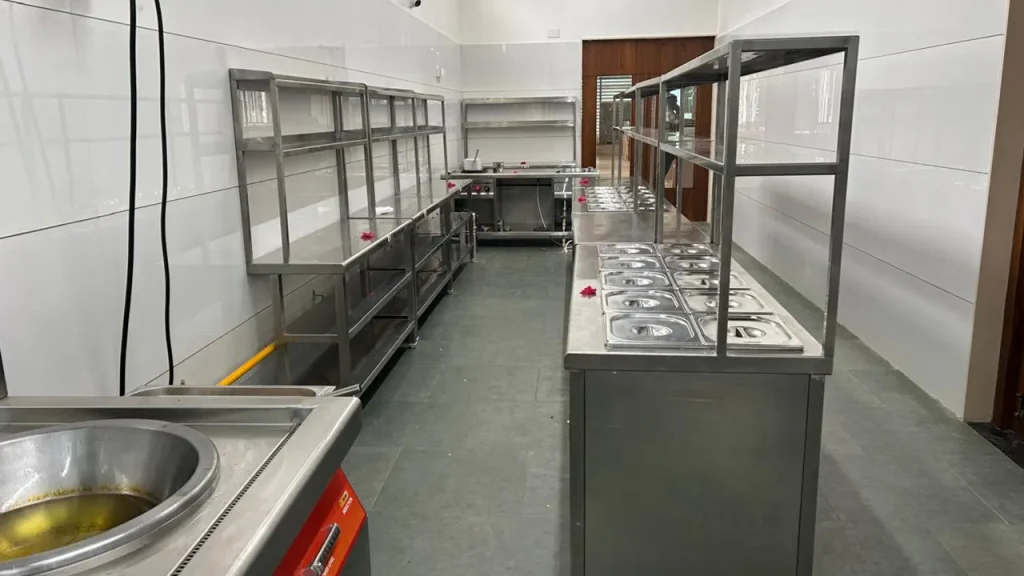
Chandran Steels is a trusted name in manufacturing food processing and food manufacturing machines designed for commercial kitchens, hotels, and industrial food units. With a focus on durability, food-grade materials, and practical design, Chandran Steels provides machines that help food manufacturers improve efficiency while maintaining strict hygiene standards. These machines are built to handle high-volume production and diverse food applications.
In modern food manufacturing, the use of advanced machines is no longer optional. They help businesses reduce production time, minimize wastage, and maintain consistent product quality. Understanding the different machines used in food manufacturing allows business owners to invest wisely and build a production setup that delivers long-term value and operational reliability., the right machinery ensures faster output, reduced labor dependency, and improved product shelf life.
In India, food manufacturing businesses such as snack production units, sweet manufacturers, commercial kitchens, and hotel suppliers increasingly rely on modern Commercial food machinery to stay competitive. These machines not only increase productivity but also help meet FSSAI and hygiene standards. Understanding the different Food processing equipment used in food manufacturing helps business owners make informed investment decisions and plan scalable operations.
This blog explains the most important Commercial food machinery used in food manufacturing, their functions, and how they support different stages of production.
1. Raw Material Preparation Machines
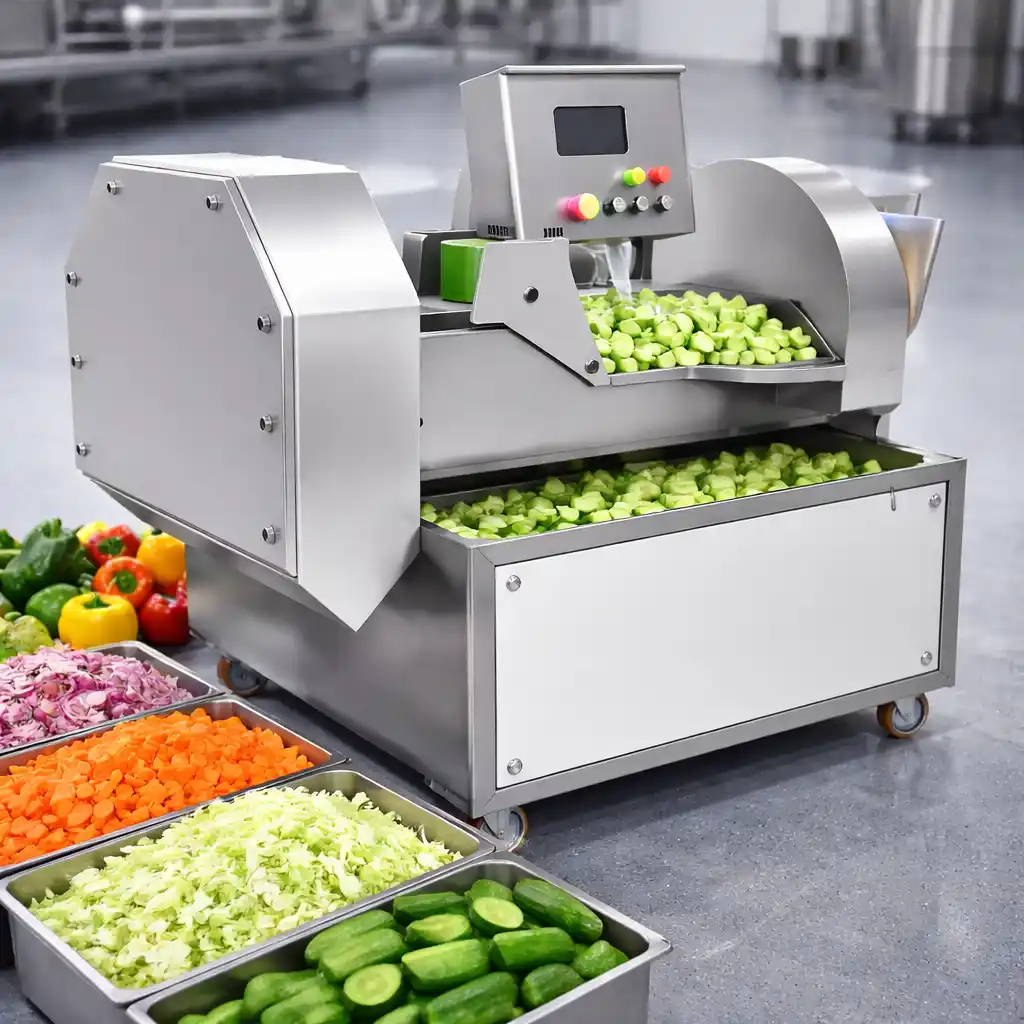
Raw material preparation is the first and most important stage in food manufacturing. At this stage, Commercial food machinery are used to clean, wash, peel, cut, grind, and size raw ingredients such as vegetables, grains, pulses, and spices. Proper preparation ensures uniform processing and reduces contamination risks.
Common preparation Food processing equipment include vegetable cutters, peelers, grinders, rice washers, flour sieving units, and pulverizers. These Food processing equipment replace time-consuming manual work and deliver consistent results. For example, rice washing machines remove dirt and excess starch efficiently, while vegetable cutting Food processing equipment ensure uniform sizes for even cooking.
In food manufacturing units, preparation machines also help reduce raw material wastage. Precision cutting and controlled grinding minimize losses and improve yield. Hygiene is another major advantage, as stainless steel construction and food-grade components prevent contamination.
Preparation Food processing equipment are widely used in snack manufacturing, bakery units, commercial kitchens, and sweet production facilities. Choosing the right capacity and automation level depends on daily production volume. Reliable preparation Commercial food machinery form the foundation of efficient food manufacturing operations.
2. Mixing and Blending Machines
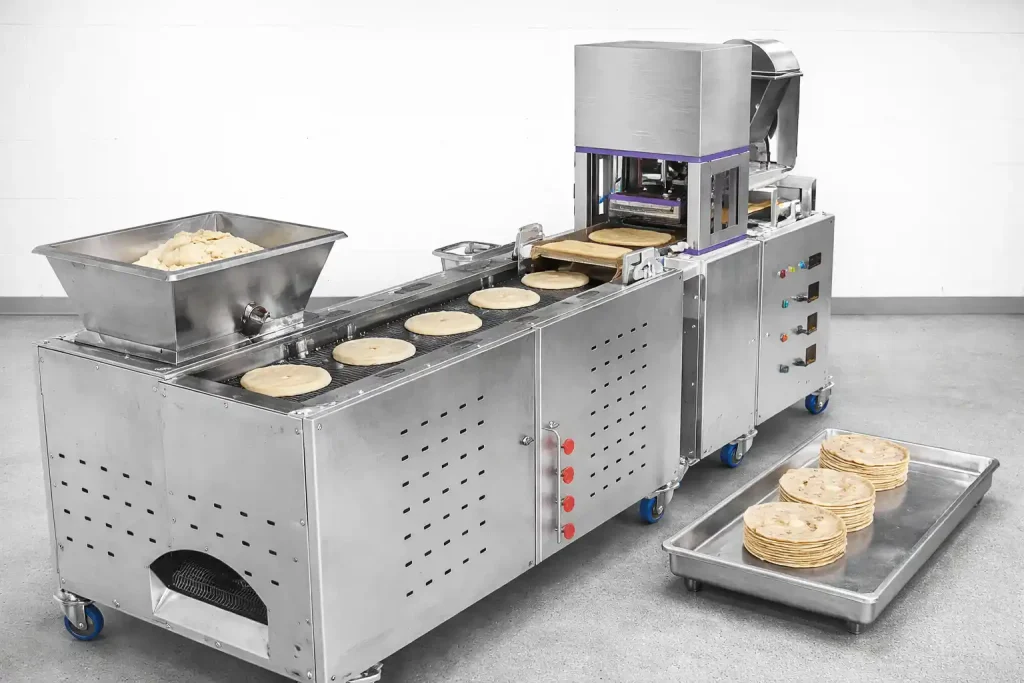
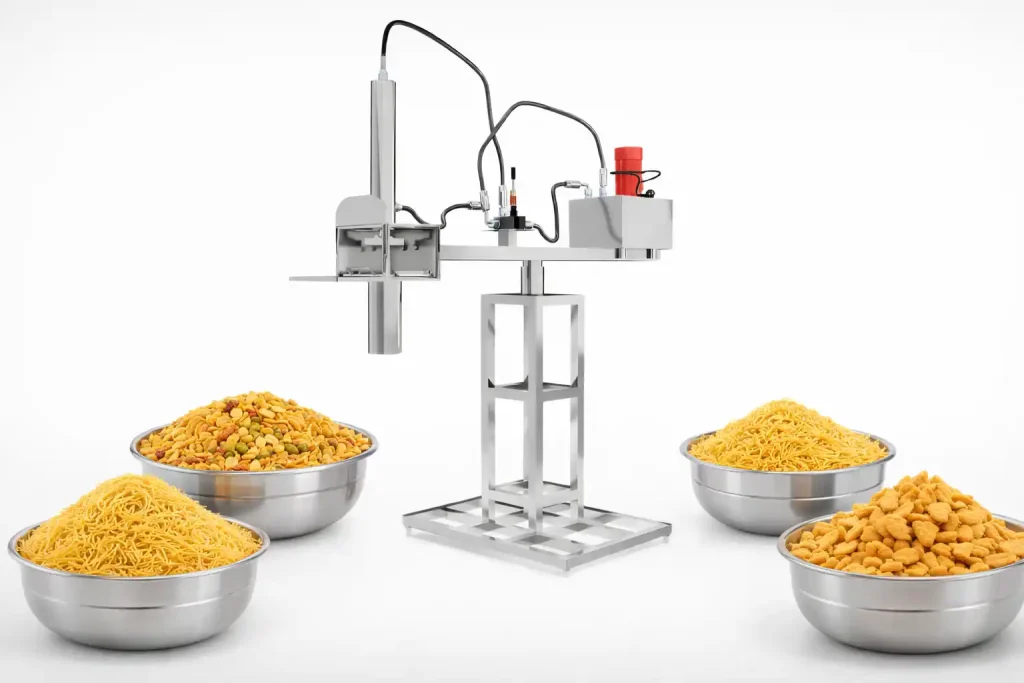
Mixing and blending are essential processes in food manufacturing, especially for products like dough, batter, spice mixes, sauces, and namkeen items. Specialized Food processing equipment ensure that ingredients are evenly combined, maintaining consistent taste and texture in every batch.
Popular mixing Commercial food machinery include dough kneaders, planetary mixers, ribbon blenders, and spice mixing units. These machines provide uniform mixing without overprocessing ingredients. In large food manufacturing plants, automated mixers allow precise control over speed and mixing time.
Using proper mixing Food processing equipment improves product quality and reduces human error. Manual mixing often leads to uneven consistency, whereas Food processing equipment maintain standardization across batches. This is especially important for branded food products where consistency is critical.
Mixing Food processing equipment also enhance safety by reducing direct human contact with food. Many modern Food processing equipment come with enclosed designs and easy-to-clean surfaces, making them suitable for hygienic food manufacturing environments.
3. Cooking and Heat Processing Machines
Cooking is a core stage in food manufacturing where raw ingredients are transformed into consumable products. Various Commercial food machinery are used for boiling, steaming, frying, roasting, and baking depending on the food type.
Examples include deep fryers, steam cookers, boiling kettles, tilting pans, roasting machines, and continuous cooking systems. These Commercial food machinery offer controlled temperature settings, ensuring even cooking and better flavor retention. In snack and sweet manufacturing, automated frying machines help maintain oil quality and reduce excess oil absorption.
Cooking Commercial food machinery improve efficiency by handling large volumes consistently. They also help reduce fuel consumption and cooking time compared to traditional methods. For commercial kitchens and food factories, these machines are essential for meeting high production demands.
Modern cooking Commercial food machinery are designed with safety features, insulation, and easy maintenance, making them ideal for long-term food manufacturing use.